Beads of Value: Understanding Place Value in Abacus
August 14, 2025
TL;DR:
- Discover how Crestar’s abacus programme nurtures strong number sense and real confidence in math by making place value fun and easy for young children.
- Our hands-on, visual approach turns math concepts into joyful, lasting skills — building not just academic success, but creativity, focus, and lifelong learning.
- Give your child a head start: watch them grow from curious learners to confident problem solvers, ready for both school and the real world.
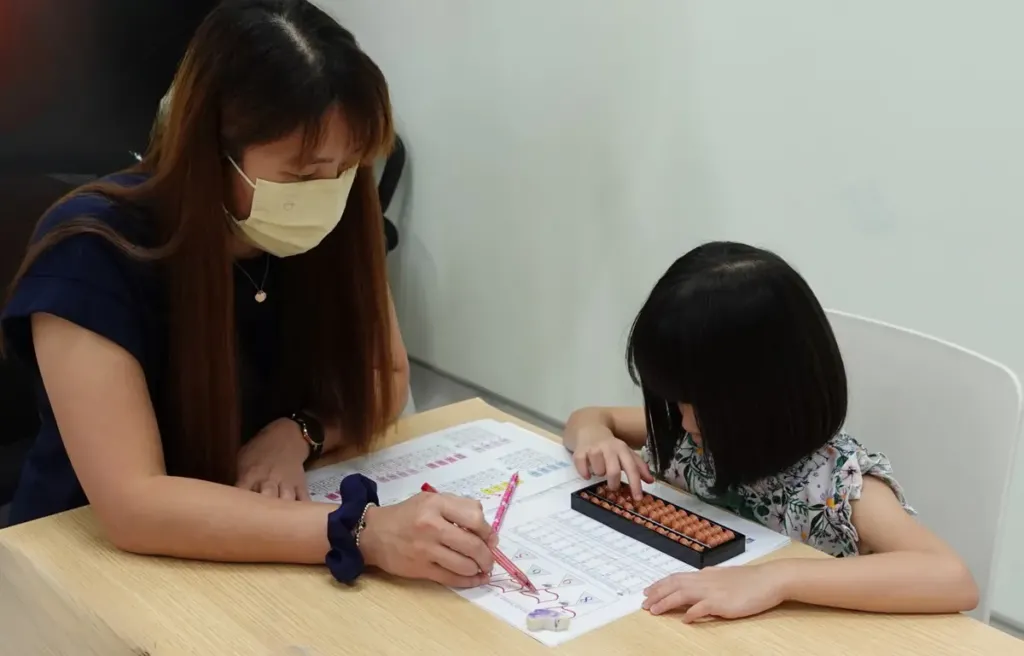
The concept of place value lays the foundation for all future mathematical understanding. At our centre, we make this abstract concept concrete by introducing children to the five-beads abacus. With its visual structure and tactile experience, the abacus turns numbers into something children can literally grasp.
What Is a Five-Beads Abacus?
The abacus consists of two sections:
- Upper bead: Each bead represents a value of 5.
- Lower beads: Each bead represents a value of 1.
Each column on the abacus represents a different place value, and the unit black dot in the centre indicates the ones place. Moving from right to left:
- The column with the first black dot is the ones place.
- The next columns are tens and hundreds (no dots).
- The column with the second black dot represents the thousands place.
- This pattern continues, alternating between dot-marked and unmarked columns to help children keep track of the number system.
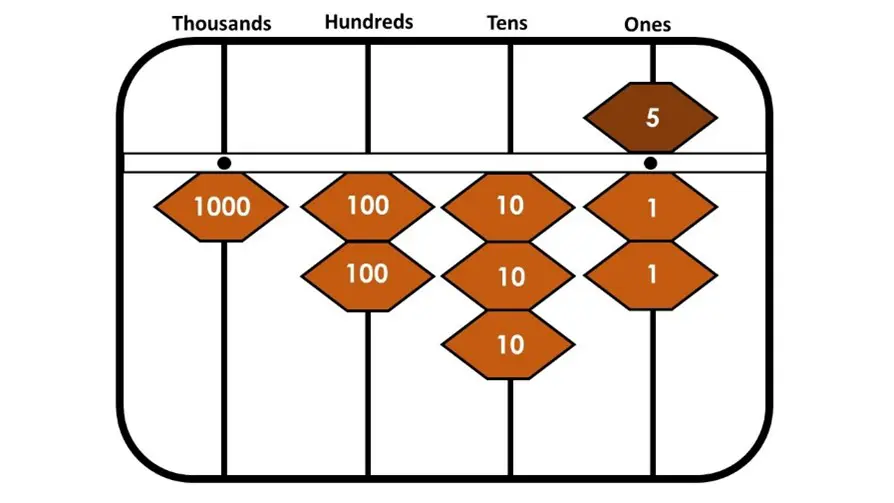
Mini Quiz: Can you solve this problem? Find the answer below*
Why Is Place Value Important?
Place value is the idea that a digit’s value depends on its position. For example, the digit 5 in tens place represents fifty (5 tens), while the digit 5 in hundreds place represents five hundred (5 hundreds). Children often find this concept difficult when taught abstractly, but the abacus offers a concrete way to see and build numbers by place.
By sliding beads up and down the rods, children learn to:
- Count and compose numbers correctly
- Understand how tens become hundreds or how ones group into tens
- Visually break down numbers into their place values (e.g. 325 = 300 + 20 + 5)
Benefits of Using Abacus to Teach Place Value
- Builds strong number sense and mental calculation skills
- Sharpens memory, concentration, and focus as children visualise and manipulate beads
- Trains patience and discipline, especially when learning multi-step calculations
- Strengthens left-right brain development by combining logic (calculation) with visualisation (bead imagery)
- Improves hand-eye-brain coordination through physical bead movement
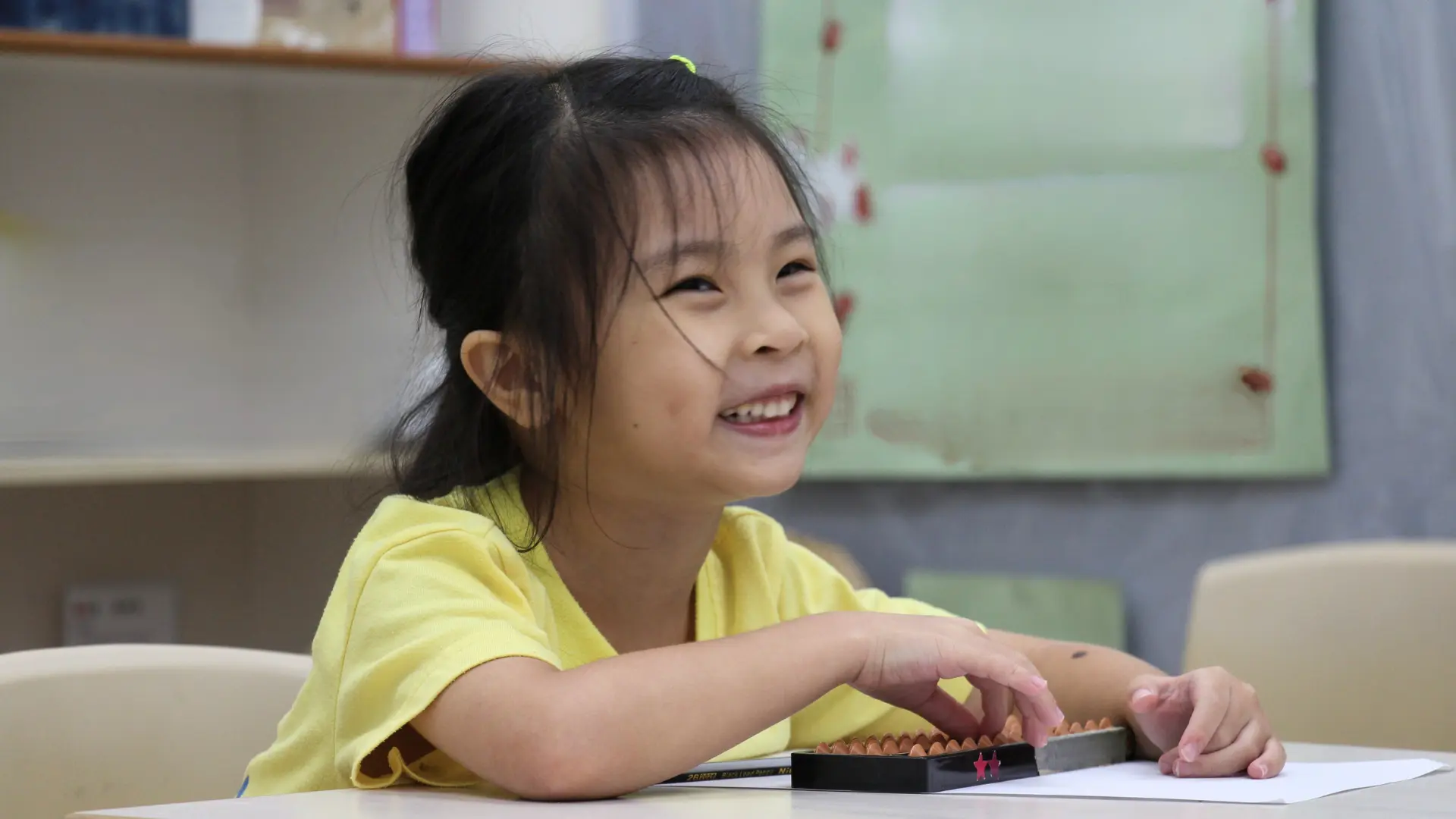
Hands-on learning: Exploring number structure through bead movement in class
Tiny Beads, Big Steps: What Preschoolers Learn with the Abacus
Through our abacus programme, children will:
- Understand the structure and purpose of place value columns
- Identify the ones, tens, hundreds, and thousands place using unit dots
- Represent 1- to 3-digit numbers accurately on the abacus
- Develop the ability to compose and decompose numbers using place value
- Transition from concrete to mental visualisation of numbers and operations
The abacus is more than a counting tool. It is a powerful bridge between concrete number experiences and abstract mathematical thinking. By introducing place value through the abacus, children not only learn to count, but also learn how numbers work, preparing them with a strong and lasting foundation in mathematics.
With each bead moved, a child takes one step closer to becoming a confident and capable math learner.
*Mini Quiz Answer: 1,237. Did you get it right?