From Creativity to Focus: How Kids’ Art Classes Support Learning
August 27, 2026
Summary:
- Kids’ art classes help children build focus through steady, hands-on creative tasks that require patience and attention to detail.
- Regular artistic practice strengthens observation skills, visual thinking, and the ability to follow structured instructions.
- Creative learning supports academic growth by improving problem-solving, confidence, and independent thinking in school.
- Choosing a structured programme helps children progress steadily through guided themes and skill-building activities.
- Crestar Learning Centre’s ArtMazing programme guides children through structured, theme-based creative learning designed to build skills, focus, and confidence at every stage.
Art has always been a natural part of childhood. Long before children learn to write full sentences, they reach for crayons and swirl colours across paper filled with imagination and personality. What may look like simple play often becomes something much deeper, where focus, patience, creativity, and confidence grow side by side.
As a parent, enrolling your child in a kids’ art class is no longer just about learning how to draw neatly or paint within the lines. It gives your child space to slow down, observe, and stay engaged with a task in a calm, structured way.
Why Do Art Lessons Help Children Focus Better?
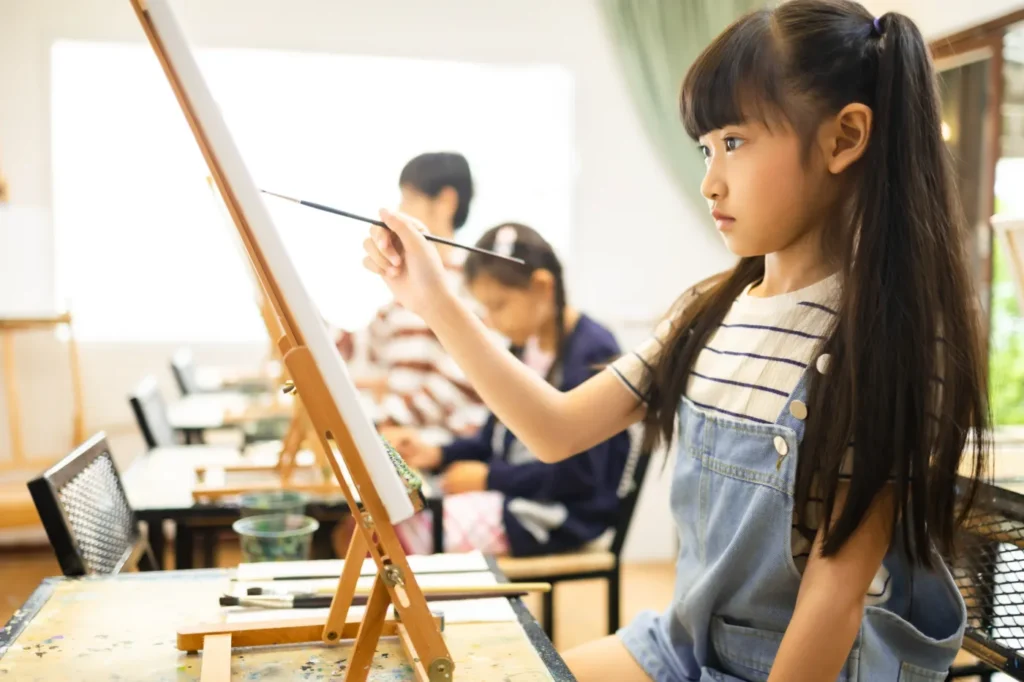
If you’ve ever watched your child carefully colour a drawing or concentrate on a small detail in a sketch, you’ve already seen focus in action. Painting, clay work, and drawing naturally encourage children to stay with a task longer, because every small step matters.
A structured kids’ art class gently builds this habit of attention. Instead of rushing, children learn to follow steps, listen to instructions, and complete work patiently. This can become a learning rhythm they carry into schoolwork as well.
Creative learning can help your child:
- Slow down and pay attention to fine details
- Build patience through step-by-step creative work
- Follow visual and verbal instructions more confidently
- Improve hand-eye coordination naturally through drawing and painting
- Develop perseverance when refining their work
- Experience pride in finishing what they start.
Building Attention and Observation Skills Through Creative Tasks
Art encourages children to truly look at the world. The shape of a leaf, the shadow on a table, the blend of colours in a sunset. These small observations slowly train attention in a calm, natural way.
Over time, this habit of noticing often carries into school learning too, especially in reading, comprehension, and problem-solving tasks.
| Creative Activity | Skill Developed |
|---|---|
| Sketching familiar objects | Focus and visual observation |
| Painting detailed scenes | Patience and sustained attention |
| Clay modelling | Fine motor coordination |
| Colour blending exercises | Decision-making and exploration |
| Guided step-by-step projects | Listening and following instructions |
| Group creative work | Shared focus and social awareness |
How Does Art Support Children’s Academic Development?
Creative learning and academic growth are more connected than many parents realise. Art encourages children to experiment, make decisions, and think visually, which are skills that support subjects ranging from writing and mathematics to science and presentations.
When children experiment with colours, adjust shapes, or rework a drawing, they are also learning how to think flexibly and stay calm when something doesn’t go perfectly. These moments build flexible thinking and emotional resilience in ways worksheets alone often cannot.
How Does Art Build Problem-Solving Skills and Classroom Confidence?
Art rarely gives just one correct answer. Children get to explore different possibilities, make choices, and adjust their work along the way. This helps them understand that mistakes are not failures, but part of learning.
For some children, hesitation in class comes from worrying about being wrong. Creative spaces gently ease this pressure.
A kids’ art class can help your child:
- Try different ways of solving visual challenges
- Strengthen memory through shapes, patterns, and imagery
- Build resilience when correcting mistakes
- Develop creative thinking for writing and storytelling
- Feel more confident sharing ideas in class
- Take pride in their finished work and progress.
How Does Finishing Art Projects Build Confidence in the Classroom?
As your child completes more art projects, you begin to see something important: confidence grows quietly in the background. Each finished piece becomes a small reminder that they can do it.
This confidence often carries into school participation, too. Your child may begin speaking up more, trying new tasks, or approaching difficult work with less hesitation.
The effect on confidence is often gradual, but it tends to build with every project completed. Creative learning supports classroom confidence by:
- Giving children space to express ideas freely
- Helping them experience progress step by step
- Reducing fear of making mistakes
- Encouraging persistence through guided tasks
- Building confidence through achievable creative goals
- Creating positive moments of encouragement and success.
Does your child rush through drawing or lose focus halfway through a creative task? Find out how a structured kids’ art class can help at our ArtMazing programme.
What Should Parents Look for in a Kid’s Art Class?
When choosing an art programme, it helps to look beyond whether your child enjoys drawing. A strong kids’ art class should support both creativity and learning development in a structured but enjoyable way.
Guided Lessons, Skill Progression, and Age-Appropriate Projects
Children learn best when challenges are just right. Not too easy, but not overwhelming either. A well-designed programme introduces new skills step by step to allow children to build confidence naturally.
| What to Look For | Why It Matters |
|---|---|
| Age-appropriate projects | Keeps learning enjoyable and suitable |
| Step-by-step progression | Builds confidence with consistent practice |
| Guided instruction | Helps children stay focused and supported |
| Exposure to materials | Encourages creativity and curiosity |
| Independent elements | Builds ownership and confidence |
| Progress Report | Helps parents and children know how much they have improved |
Signs of a Well-Structured Art Programme
A good kids’ art class doesn’t just keep children busy. It also helps them grow.
Here are the signs that a programme is genuinely supporting your child’s development, rather than simply filling time. Look out for:
- Clear progression across different age groups
- Patient and encouraging art instructors
- Balance between structure and creativity
- Activities that build observation and focus
- Exposure to different art techniques and materials
- A supportive classroom environment.
Balancing Creativity, Focus, and Confidence
Children learn best when they feel safe to explore and guided enough to improve. The right balance helps them stay engaged without feeling pressured.
When that balance is in place, the difference shows up in how your child approaches tasks both inside and outside the classroom. A well-structured programme can help your child:
- Stay focused for longer creative tasks
- Build patience through guided learning
- Feel more confident expressing ideas
- Develop pride in their work
- Learn independently with gentle support
- Enjoy a positive relationship with learning.
Are Kids’ Art Classes Worth It for Long-Term Development?
Creative skills don’t develop overnight. Just like reading or writing, they grow slowly through practice and encouragement. When children attend a kids’ art class regularly, they are learning art while building habits that support learning in many areas of life.
As children grow, these skills can continue to support school performance, emotional expression, and independent thinking.
What Does Consistent Creative Practice Look Like Over Time?
Progress in art rarely announces itself loudly. Instead, it shows up in small, steady shifts in how your child thinks, focuses, and engages with challenges. With consistent creative practice, your child may gradually develop:
- Stronger focus and patience in school tasks
- Greater confidence in expressing thoughts and ideas
- Improved resilience when facing challenges
- More willingness to try new things
- Stronger visual thinking and problem-solving skills
- A more balanced and enjoyable learning experience.
Support Your Child’s Growth Through a Kids’ Art Class at Crestar Learning Centre
At Crestar Learning Centre, our kids’ art class programme, ArtMazing, is designed to guide children through structured creative exploration, where imagination and focus develop side by side.
Each session introduces a wide range of skills, techniques, artists, movements, and mediums through theme-based lessons with a contemporary art approach. With a structured roadmap, children progress step by step and build confidence at every stage.
Contact our team today to find out how ArtMazing can support your child’s creative development and build the focus and confidence they carry into every area of learning.