Making Chinese Learning More Fun Through Tongue Twisters
May 28, 2026
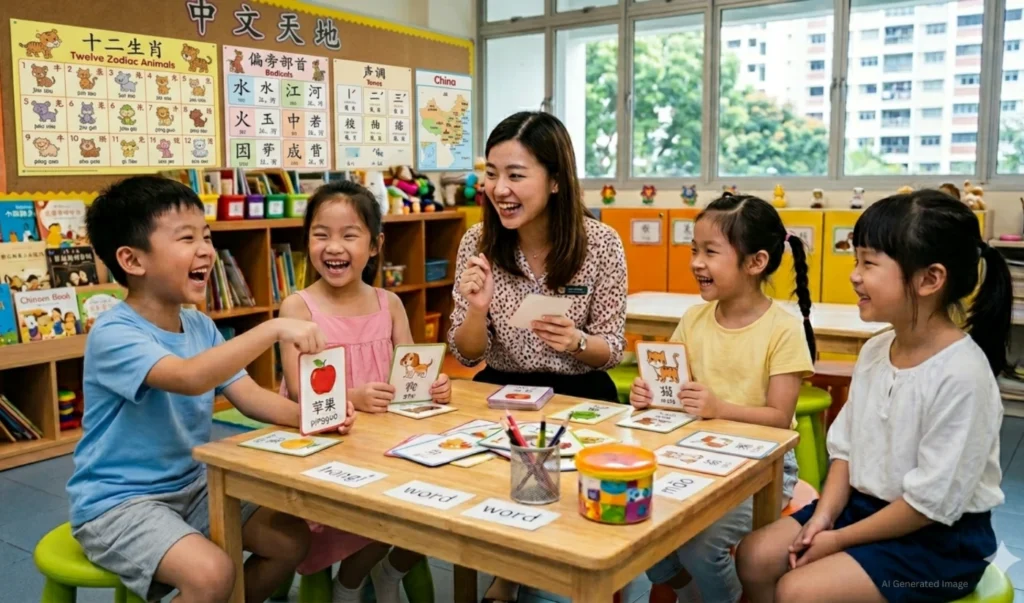
Learning Chinese can be both enjoyable and effective when approached in creative ways. One such approach is the use of tongue twisters- a fun and effective tool that helps students develop a strong foundation and oral expression. By repeating similar sounds and word patterns, students can practise pronunciation, sharpen their listening skills, and gain greater confidence in speaking.
Through regular practice, children learn to better distinguish initials, finals, and tones, while also strengthening their memory and concentration. Compared to rote memorisation of vocabulary, tongue twisters feel more like an enjoyable language game. They encourage active participation, rhythmic clapping, role-play, and other interactive activities, allowing students to learn in a relaxed and cheerful atmosphere. Teachers can further enrich these activities by incorporating stories, actions, facial expressions, and real-life situations to make lessons more dynamic and engaging.
Chinese learning does not have to be dull or intimidating. Through tongue twisters, nursery rhymes, drama performances, and interactive games, children can learn through play, practise through speaking, and apply through performance. As learning extends beyond textbooks and becomes part of daily expression, children naturally grow more willing to speak Chinese- building both confidence and a lasting love for the language.
让华文学习更有趣:从绕口令开始
华文学习既可以有趣,也可以高效,关键在于采用富有创意的学习方式。其中,绕口令便是一种有趣且有效的学习方式,它能够帮助学生打下良好的语言基础与口语表达能力。通过反复练习相似的发音和词语结构,学生可以锻炼发音的准确性、提升听力辨识能力,并增强开口说华文的自信心。
通过持续练习,孩子们能够更好地区分声母、韵母和声调,同时也能提升记忆力与专注力。相比死记硬背词汇,绕口令更像是一种轻松有趣的语言游戏。它能够鼓励学生积极参与,通过节奏拍手、角色扮演以及各种互动活动,让孩子们在轻松愉快的氛围中学习。教师也可以结合故事、动作、表情以及生活化情境,让课堂更加生动有趣、富有吸引力。
华文学习不一定是枯燥或令人畏惧的。通过绕口令、童谣、戏剧表演以及互动游戏,孩子们能够在玩中学、在说中练、在表演中运用所学。当学习不再局限于课本,而逐渐融入有趣,有节奏的表达时,孩子们自然会更愿意开口说华文,同时建立自信,并培养对华文长久的兴趣与热爱。